

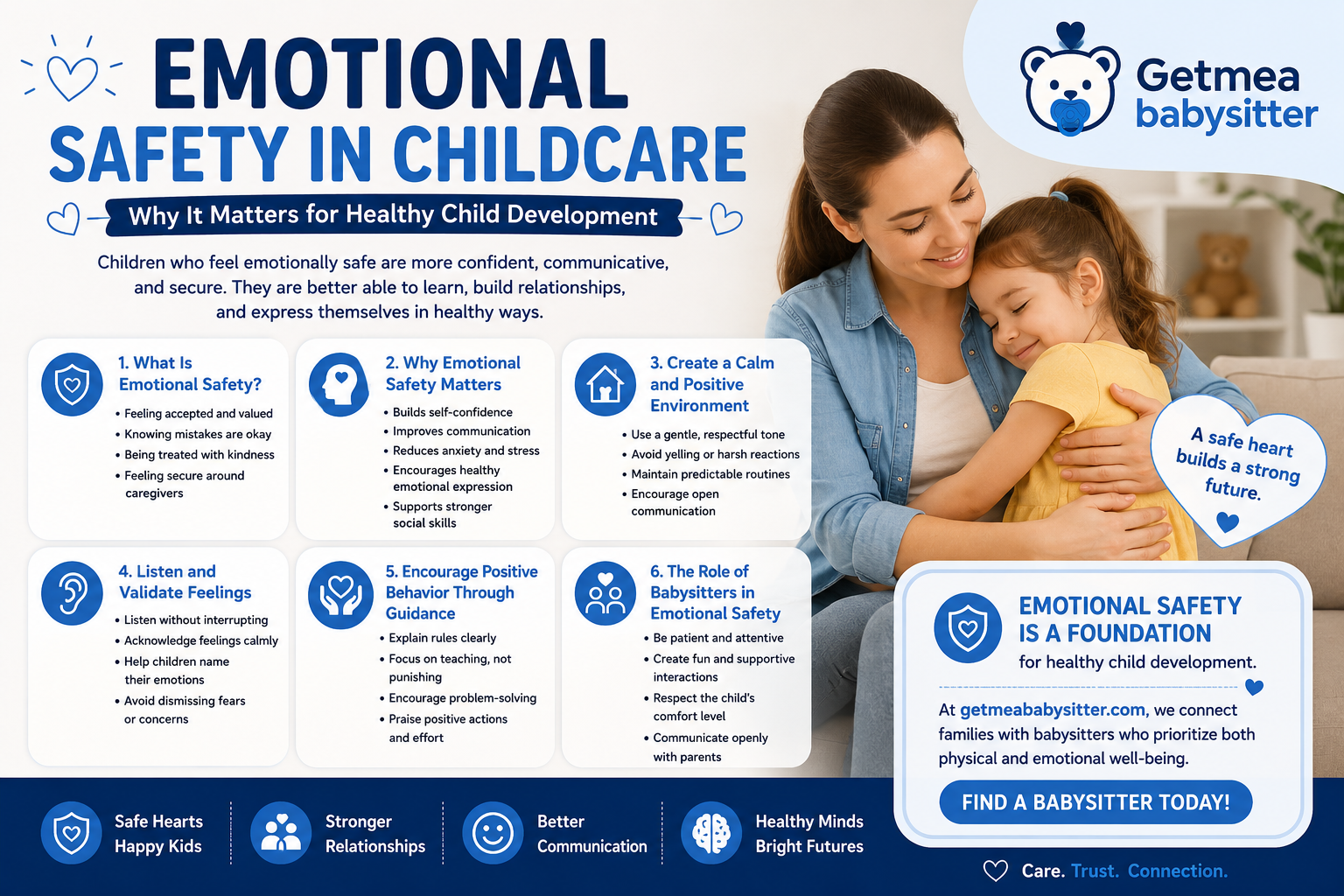
Emotional Safety in Childcare: Why It Matters for Healthy Child Development
Childcare safety is not only about preventing physical harm — emotional safety is just as important. Children who feel emotionally safe are more confident, communicative, and secure. They are better able to learn, build relationships, and express themselves in healthy ways.
Parents and babysitters both play an important role in creating a positive emotional environment where children feel respected, heard, and supported.
1. What Is Emotional Safety?
Emotional safety means children feel accepted, valued, and comfortable expressing their feelings without fear.
- Feeling listened to and understood
- Knowing mistakes are handled calmly
- Being treated with patience and kindness
- Feeling secure around caregivers
2. Why Emotional Safety Matters
A child’s emotional well-being directly affects their development and behavior.
- Builds self-confidence
- Improves communication skills
- Reduces anxiety and stress
- Encourages healthy emotional expression
- Supports stronger social skills
3. Create a Calm and Positive Environment
Children thrive in environments where they feel calm and supported.
- Use a gentle and respectful tone
- Avoid yelling or harsh reactions
- Maintain predictable routines
- Encourage open communication
4. Listen and Validate Feelings
Children need to know that their emotions matter.
- Listen without interrupting
- Acknowledge feelings calmly
- Help children name their emotions
- Avoid dismissing fears or concerns
5. Encourage Positive Behavior Through Guidance
Teaching and guiding works better than fear-based discipline.
- Explain rules clearly
- Focus on teaching instead of punishing
- Encourage problem-solving
- Praise positive actions and effort
6. The Role of Babysitters in Emotional Safety
Babysitters often become trusted adults in a child’s life. Their approach can greatly impact how safe and comfortable a child feels.
- Be patient and attentive
- Create fun and supportive interactions
- Respect the child’s comfort level
- Communicate openly with parents
Final Thoughts
Emotional safety is a foundation for healthy child development. By creating supportive and understanding environments, parents and babysitters can help children feel secure, valued, and confident every day.
Looking for Caring & Trusted Childcare?
At getmeababysitter.com, we connect families with babysitters who prioritize both physical and emotional well-being.











Comments